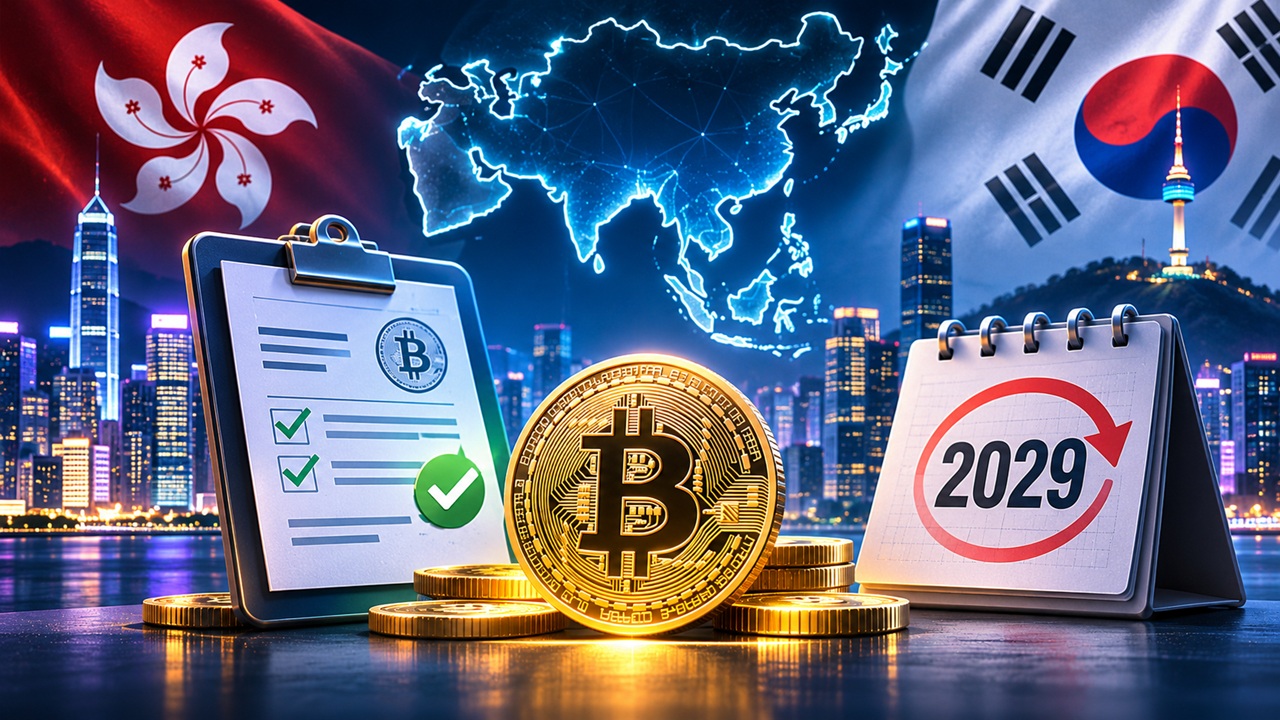
Asia is taking different approaches to cryptocurrency taxation. Hong Kong has approved new reporting requirements for digital asset platforms. South Korea announced plans to postpone its tax on cryptocurrency gains until 2029.
The difference goes beyond implementation schedules. Hong Kong wants authorities to have information about users’ transactions. South Korea believes it still needs to improve its oversight mechanisms before it begins collecting the tax.
Both decisions could change the incentives facing investors and exchanges, particularly when trading activity can shift between platforms in different countries.
The problem for Asia is that regulatory differences could temporarily benefit certain markets without resolving the difficulties of overseeing an industry that operates across borders.

Hong Kong Moves Toward Greater Crypto Tax Transparency
Hong Kong’s Legislative Council approved legislation incorporating the OECD’s Crypto-Asset Reporting Framework (CARF).
Starting in 2027, service providers covered by the rules will be required to collect information about their customers and transactions. The automatic exchange of that data with other jurisdictions will begin in 2028.
This measure does not, by itself, introduce a general tax on cryptocurrency gains. Its purpose is to help authorities identify transactions that may be subject to obligations.
This distinction is important. Requiring information is not the same as raising taxes, although it could reduce opportunities to conceal transactions conducted through foreign platforms.
For exchanges, complying with these obligations means adapting their customer identification, recordkeeping, and data reporting systems. Companies with sufficient resources will be able to incorporate these requirements into their operations, while smaller protocols or firms could face greater difficulties.
Hong Kong could also offer an advantage to financial institutions that need predictable rules for operating with digital assets.
But that advantage comes at a cost. Greater transparency also requires protecting users’ data and preventing administrative obligations from becoming disproportionate barriers.
Investors who value oversight and legal certainty may find this model attractive. Others may prefer jurisdictions with fewer reporting requirements.
That does not mean capital will necessarily leave Hong Kong. It means tax and administrative conditions will carry more weight when investors decide where to operate.
South Korea Postpones Crypto Tax Implementation
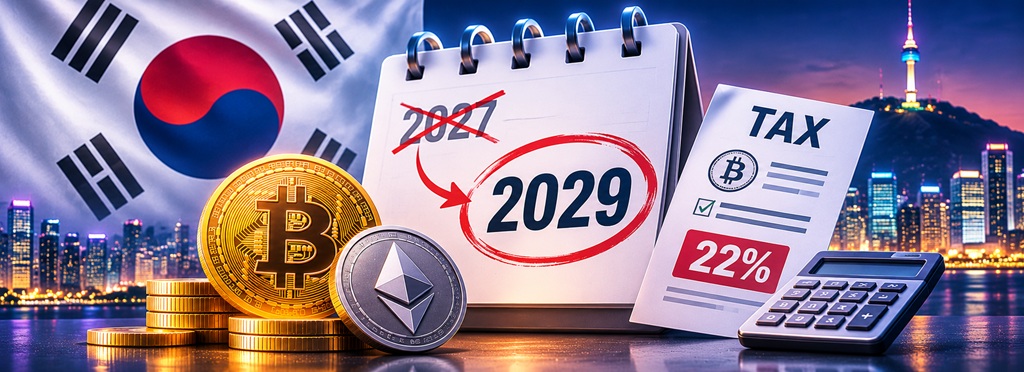
South Korea is proposing to delay its tax on cryptocurrency gains for a fourth time. The regulation was originally scheduled for 2022 and is currently set to take effect in 2027.
The tax carries a 22% rate, including local ones, on annual gains exceeding 2.5 million won.
The government wants to postpone its implementation until 2029, but the proposal still needs to complete the legislative process.
Authorities argue that cryptocurrency information sharing with the United States will not begin until 2029. Introducing the tax earlier could make it harder to oversee transactions conducted outside the country.
The concern is that effectively taxing gains recorded on domestic exchanges, without having comparable information from foreign platforms, could create unequal treatment among taxpayers.
However, repeatedly postponing a regulation also has consequences.
Investors may make decisions based on rules that change before taking effect. Exchanges also lack a stable tax timetable for developing their systems.
South Korea has additional time to prepare its regulations, but each postponement prolongs uncertainty about users’ future obligations.

The contrast with Hong Kong is particularly interesting. One market is moving forward with information collection, while the other is delaying taxation precisely because it considers international data-sharing mechanisms insufficient.
Both recognize that cryptocurrencies require cooperation between authorities. They differ over which measures should be implemented first.
The underlying problem with this fragmentation is that investment decisions could increasingly respond to temporary regulatory differences, rather than the quality of services or economic opportunities.
Nor should it be assumed that stricter regulation will necessarily push activity toward opaque platforms. Institutions need regulatory compliance, and many investors prefer to operate through supervised intermediaries.
But if administrative costs rise too much or the rules change constantly, some users may seek alternatives outside regulated channels.
Asia therefore faces two different challenges: Hong Kong must demonstrate that it can strengthen transparency without undermining the competitiveness