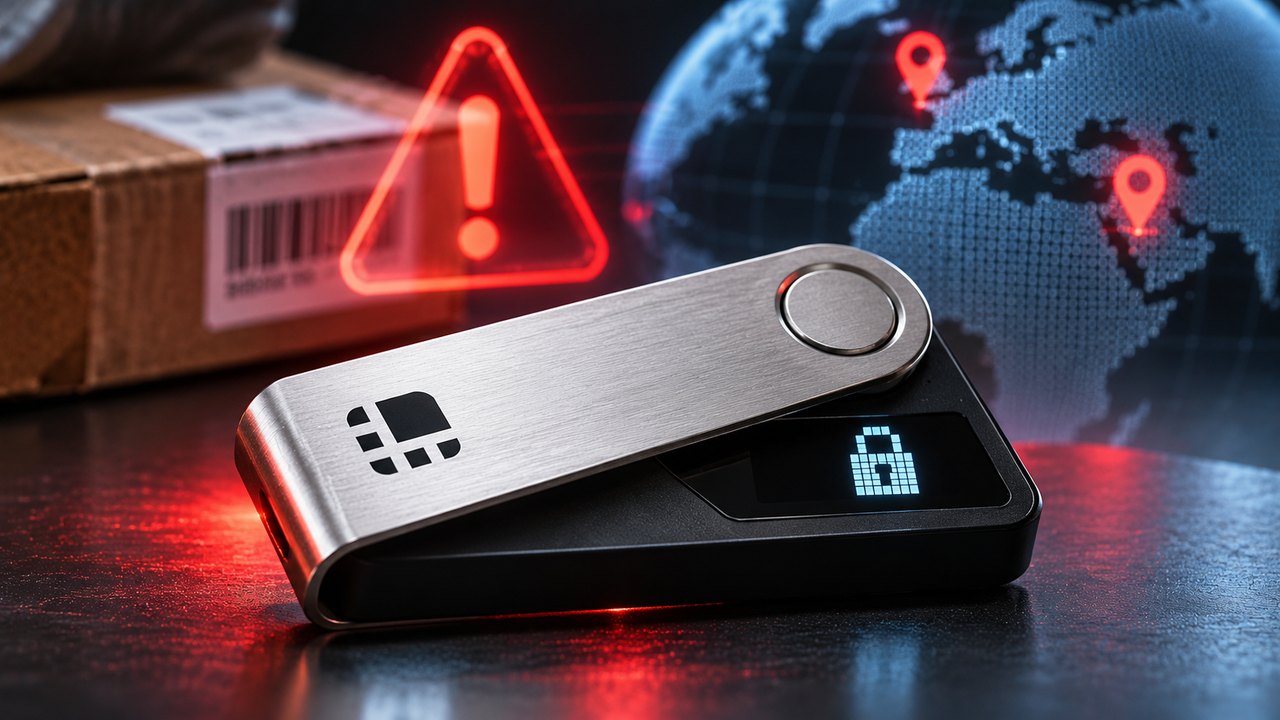
Ledger Chief Technology Officer Charles Guillemet will leave the hardware-wallet company at the end of 2026 after nine years, as Ledger separately continues investigating a physical device-tampering campaign affecting its distribution network. In a November 19 post on X, Guillemet said the handover had been in preparation for months and that Ledger’s teams, partners and product roadmaps were ready. Neither Guillemet nor Ledger has connected his departure to the ongoing hardware-implant investigation.
Guillemet joined Ledger as chief security officer in December 2017 and founded Ledger Donjon, the company’s internal attack laboratory. Ledger formally appointed him CTO in December 2019, expanding his responsibility across security and technology operations. His tenure placed him at the center of Ledger’s hardware-security research, vulnerability testing and responsible-disclosure programs.
Personal update: I’ll be leaving @ledger at the end of 2026. After nine years, those words are strange to type.
I joined as CSO in December 2017. No desks, no team, just a blank page. I built the @DonjonLedger, our attack lab. Since then it has broken smartphone secure-boot…
— Charles Guillemet (@P3b7_) November 19, 2026
Departure Comes During Expanding Implant Investigation
Ledger confirmed on November 18 that the physical tampering campaign first identified in Southeast Asia had also produced confirmed modified devices outside the region. The company said every confirmed device showed the same type of added hardware designed to capture recovery phrases during setup, while its Secure Element and operating system remained unaffected. Ledger continues to classify the incident as a distribution-channel compromise rather than a vulnerability in its core wallet architecture.
The investigation initially centered on devices associated with Southeast Asian reseller CryptoBilis and prompted Ledger to pull hardware from multiple Asian retail markets. Bitquery later estimated that $102 million had been drained from 335 wallets across six blockchains. That $102 million remains an independent on-chain estimate rather than a Ledger-confirmed incident loss total.
More recent drains have expanded the geographic scope. Bitquery traced another $1.68 million taken from 16 wallets on November 14 and 16, including publicly reported cases involving buyers in Dubai and Berlin, and linked the activity to the October thief through an address used to fund transaction fees. Ledger has confirmed tampered units in Berlin and is investigating two reported devices in Dubai, but on-chain tracing alone cannot prove how every affected wallet’s recovery phrase was compromised.
The physical attack differs from software supply-chain failures such as the Trust Wallet browser-extension compromise. In Ledger’s case, genuine hardware was modified after leaving the company’s direct control, allowing an added component to capture the recovery phrase displayed during initialization. Once that phrase is exposed, attackers can reconstruct the wallet elsewhere without defeating the Secure Element or altering blockchain consensus.
Guillemet Turns Toward AI Security
Guillemet said he is now building a new security-focused project, although he has not disclosed its name, financing or launch date. His announcement emphasized the changing threat environment, particularly the ability of artificial intelligence to make attacks cheaper, faster and easier to scale. His stated next step is a broader cybersecurity venture rather than another announced hardware-wallet product.
Ledger has not publicly named Guillemet’s successor as of November 20. His departure therefore creates a leadership transition while Donjon and the wider company continue examining how manipulated devices entered legitimate reseller channels. The incident has already illustrated how physical provenance can become as important as firmware integrity, echoing other wallet failures where compromised seed generation exposed funds without breaking the underlying blockchain. The immediate operational challenge for Ledger is maintaining that security program while completing the investigation and its CTO transition as separate processes.