
President Donald Trump has nominated four new commissioners to the Securities and Exchange Commission (SEC) and the Commodity Futures Trading Commission (CFTC). The nominees, two Republicans and two Democrats, must receive Senate confirmation before joining the agencies that oversee much of the U.S. financial market and cryptocurrency companies.
The decision could have important consequences for the crypto industry, particularly because Congress has yet to pass legislation clearly defining the responsibilities of both agencies. But appointing officials with experience in digital assets does not guarantee that companies will finally get the rules they have been demanding for years.
The United States’ regulatory problems will not be solved simply by appointing new commissioners. Resolving them also requires agreements on token classification, intermediary obligations, and the limits of government oversight.
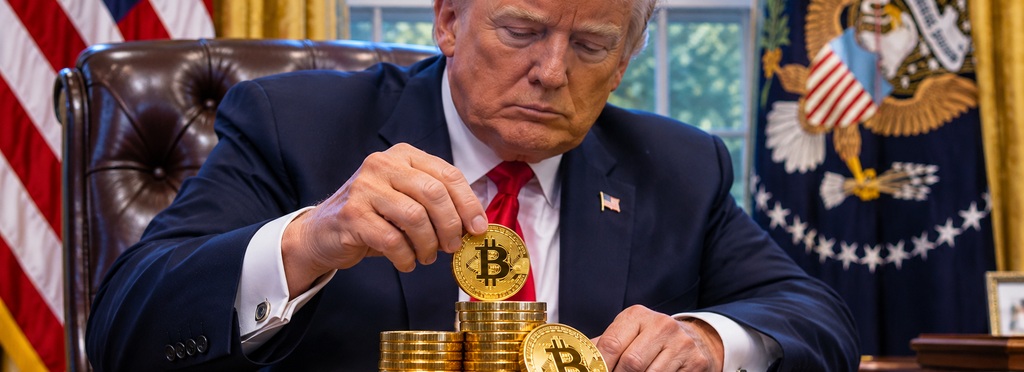
Trump Seeks to Fill Vacancies at Both Agencies
The SEC currently operates with only two of its five commissioners, while the CFTC has just its chairman, Michael Selig. If the Senate confirms all four nominees, both agencies will gain new perspectives in their deliberations.
For the SEC, Trump selected Republican Steven Levine and Democrat Kristin Johnson. Levine would replace Hester Peirce, who spent years advocating for regulations more favorable to cryptocurrency development and led the agency’s digital asset task force.
Johnson, a former CFTC commissioner, has advocated stricter oversight of certain financial activities, including decentralized finance (DeFi) platforms and crypto custody services.
Peirce’s replacement deserves particular attention. Her support for crypto-specific rules gave the industry an advocate within the SEC. Levine has institutional experience, but he has yet to establish a comparable public track record in cryptocurrency regulation.
At the CFTC, the nominees are Republican Nathan Anonick and Democrat Matthew Rowland. Both participated in legislative work related to the Clarity Act, a proposal intended to establish regulatory responsibilities over digital assets.
That experience could help them develop technical regulations. However, familiarity with proposed legislation does not automatically give regulators the authority to implement all its provisions.
Experience With the Clarity Act
The Clarity Act seeks to resolve one of the industry’s central disputes: which digital assets fall under the SEC’s jurisdiction and which should be regulated as commodities by the CFTC.
Without a sufficiently precise division of responsibilities, companies may face different interpretations of their activities. This particularly affects exchanges, crypto custody services, and certain DeFi projects.
Anonick and Rowland are familiar with the legislative negotiations, but their potential appointments would not automatically break the deadlock. Commissioners can develop regulations within their existing authority, but they cannot replace Congress when legislative changes are required.
There is also a difference between reducing uncertainty and adopting rules that benefit every company. Clear regulations may impose demanding requirements concerning custody, conflicts of interest, and customer protection.
For the industry, those requirements could be costly. For investors, they could provide safeguards that currently depend on each platform’s practices.
Having representatives from both political parties should not necessarily be viewed as an obstacle. Rules supported across political lines are more likely to survive changes in administration.
The real problem arises when disagreements prevent concrete decisions and prolong reliance on regulatory interpretations that remain subject to revision.

The Real Test Will Be the SEC’s and CFTC’s Decisions on Cryptocurrencies
Trump has advocated a policy more favorable to cryptocurrencies, but presidential priorities do not resolve every disagreement between regulatory agencies.
The new commissions will have to address specific issues, including digital asset and cryptocurrency custody, exchange oversight, and the treatment of DeFi transactions. They will also need to tackle problems that arise when traditional financial products incorporate blockchain technology.
The crypto industry needs to know which activities require registration, what obligations apply to each intermediary, and what protections users receive. Statements supporting innovation offer little practical value if companies still do not know the conditions under which they can operate legally.
Furthermore, the nominations still require Senate confirmation. Democrats will take control of that chamber in January, casting doubt on the approval timeline.
Appointing experienced commissioners could improve both agencies’ technical capabilities, but regulatory clarity will depend on the rules they manage to adopt and the legislation Congress passes.