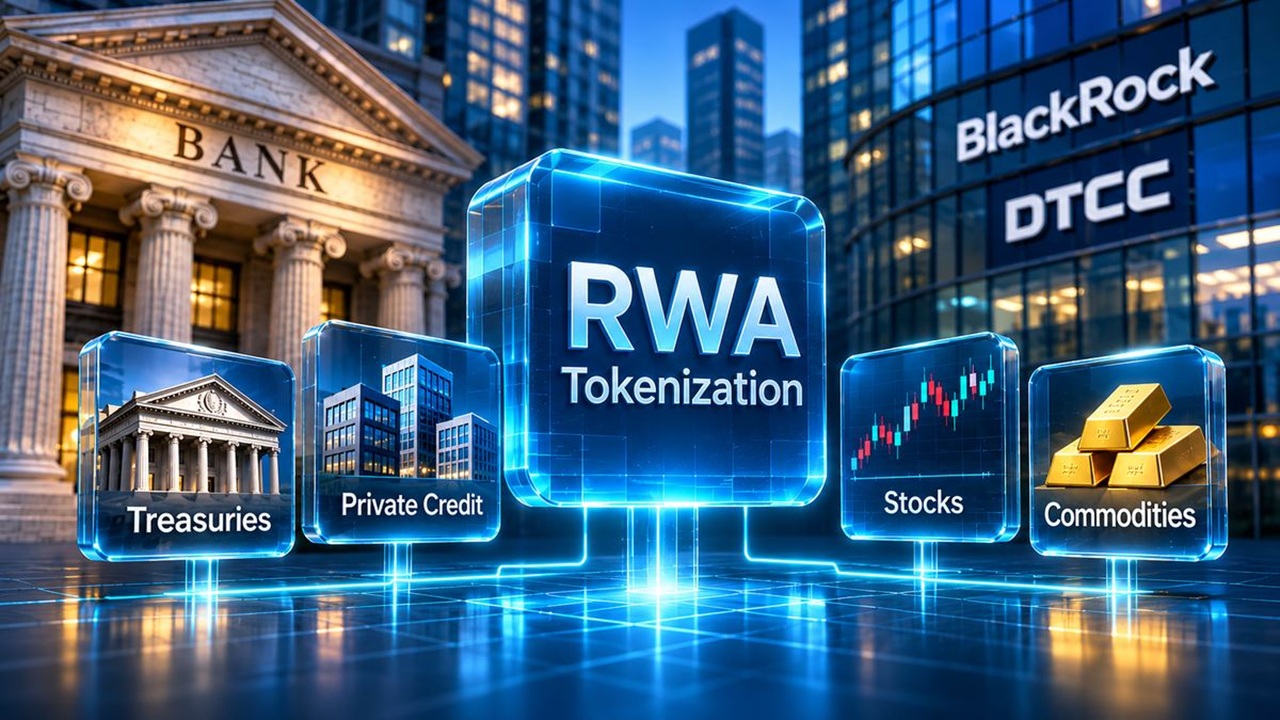
The tokenization of real-world assets (RWAs) is no longer a promise confined to crypto companies. Asset managers, banks, and financial infrastructure providers are incorporating tokenized assets into their operations. However, enthusiasm over this growth is obscuring a fundamental question: how many of these assets can actually be traded, and how many remain locked up?
Tokenization already serves as a bridge between blockchain and traditional finance, but it has yet to deliver on its main promise: creating more liquid and accessible markets. Institutional backing demonstrates that the technology has real-world applications. Mistaking that support for a completed transformation of the financial system would be a mistake.
Growth in Tokenization Still Does Not Guarantee Liquidity
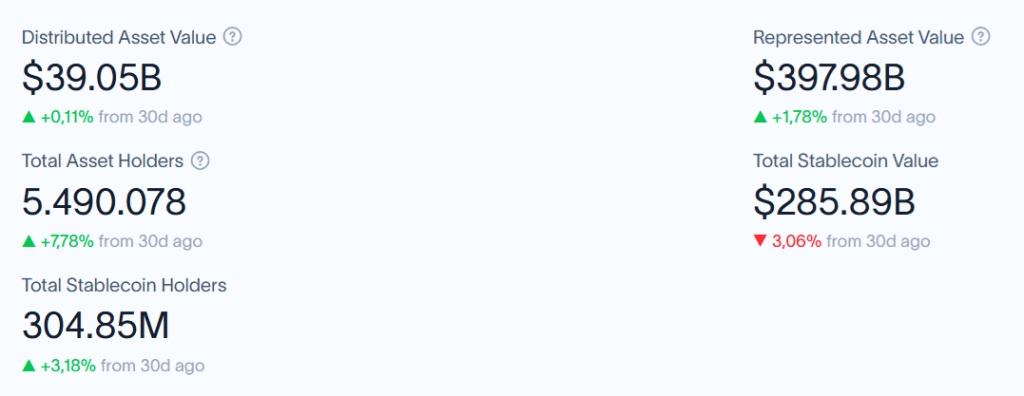
According to RWA.xyz, the value of distributed tokenized real-world assets on blockchain stands at around $39 billion. Instruments linked to US Treasury securities continue to dominate the market, although private credit and tokenized equities are also growing.
The expansion has been substantial, but market size alone says little about how these assets are used. A fund can issue tokenized shares and hold them in a handful of institutional wallets. Its market capitalization will increase even if there is barely any trading activity between buyers and sellers.
A study on RWA liquidity, published in 2026, found considerable differences across asset classes. Gold-backed tokens showed more sustained activity than many products linked to bonds and private credit. The value of assets issued, on its own, was also insufficient to predict how liquid each instrument would be.
This exposes a contradiction the industry needs to address. Representing an asset on a blockchain does not guarantee that someone will be willing to buy it. If secondary markets lack participants, investors may face the same difficulties selling their holdings that existed before tokenization.
BlackRock and DTCC Bring Blockchain Into the Financial System
Institutional backing, however, is essential. BlackRock manages BUIDL, one of the market’s leading tokenized funds, while other asset managers have developed products linked to government debt and investment strategies.
The most important development may be taking place within financial infrastructure. On October 28, DTCC launched its tokenization service, allowing digital representations of securities held in custody by its subsidiary, DTC.
The service aims to facilitate collateral mobilization and access to new sources of liquidity. Its importance lies in the fact that an institution responsible for processing transactions in traditional financial markets is integrating blockchain into its own systems.
This changes the commercial outlook. Banks and asset managers no longer need to bet on an entirely new market to use tokenized assets. They can start by improving familiar processes, such as collateral management, securities transfers, and transaction settlement.
But the involvement of major institutions does not necessarily mean broader access. Products may remain restricted to accredited investors, financial institutions, or specific jurisdictions. Digital infrastructure does not automatically eliminate the legal requirements governing the ownership and distribution of securities.

The Real Challenge Lies Outside Blockchain
Tokenization can reduce operating costs and facilitate transfers, but some problems cannot be solved by smart contracts alone. Regulatory fragmentation, investor identification requirements, and the lack of deep secondary markets continue to limit its development.
There is also a risk that institutions will recreate the same closed structures that already dominate traditional finance. If tokenized assets can circulate only among authorized participants and depend on specific intermediaries, ordinary investors will lose access to some of the benefits associated with blockchain.
That is why success should not be measured solely by the billions of dollars in assets issued or the number of banks announcing projects. Actual transaction activity matters more, along with how easily assets can be sold and whether investors can access them without unnecessarily complex procedures.
Tokenization is not overhyped as a technology, but some expectations about its immediate results certainly are. BlackRock and DTCC provide concrete evidence that institutional adoption is already a reality. What the industry still needs to demonstrate is that it can extend those advantages to a market with greater liquidity, competition, and investor access.