



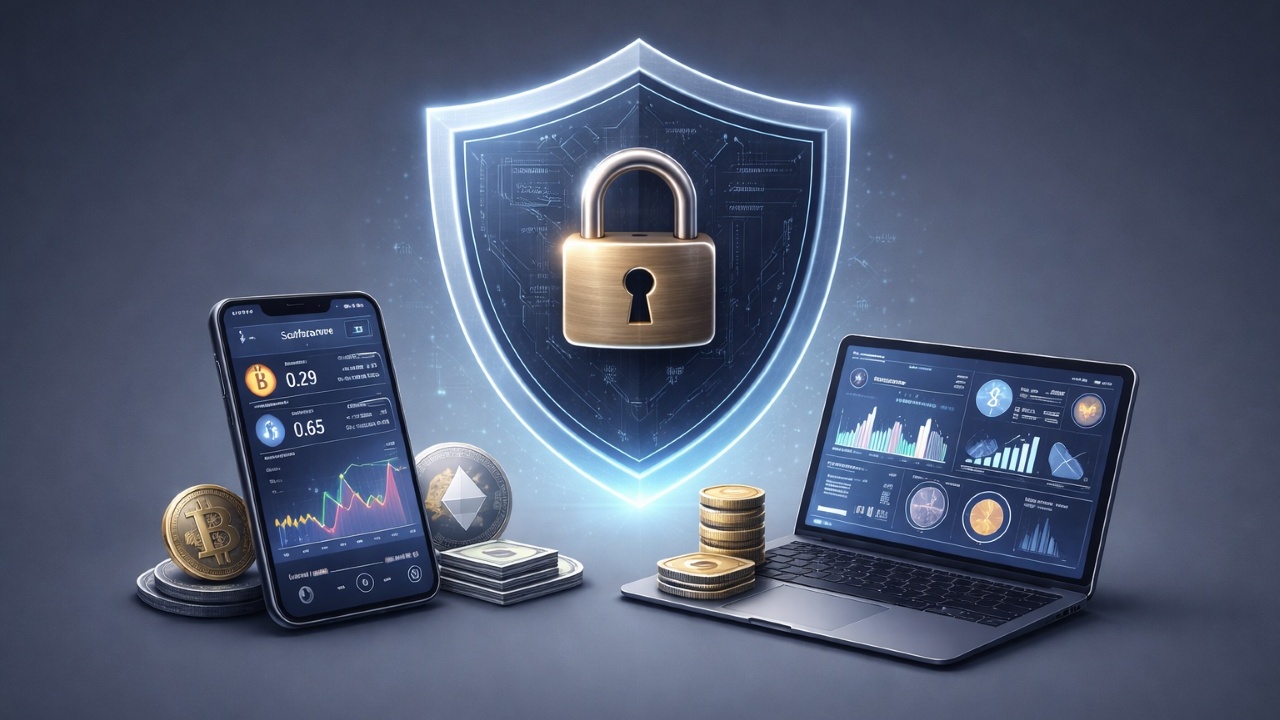
Software crypto wallets are not a scam, and they are not magically safe either. Their security depends less on the app than on the user’s threat model. The SEC’s December 2025 bulletin says hot wallets, including desktop, mobile, and web apps, are convenient because they are connected to the internet, but that same connection exposes them to cyberthreats. That is the real paradox of software wallets in 2026: accessibility is their advantage and their weakness. They work best for active use, smaller balances, and fast transfers, but the internet-facing design means convenience always carries attack surface with it for users.
Where software wallets are genuinely secure
Software wallets can be secure, but only under disciplined operating habits. The biggest weakness is usually not cryptography, but behavior. The SEC says wallets do not store the assets themselves; they store the private keys, and if those keys or seed phrases are lost or stolen, access can be permanently lost. That changes how beginners should think about security. A wallet is not just an app login. It is a control panel for irreversible money movement. In practice, many compromises begin with one preventable error: a user entering secrets into the wrong page, device, extension, or conversation with a scammer.
That is why phishing remains the believable route into a wallet breach. Most hacks begin by tricking the human, not breaking the code. The FTC warned that fake MetaMask emails told users their wallet was blocked and urged them to click links or call a number, while the agency advised people to slow down, avoid unexpected links, and contact companies through known websites or numbers. The SEC likewise says never share private keys or seed phrases. For a software wallet, that rule is simple: anything asking for your recovery phrase is not support. It is the attack itself for users.
How to lower the odds of getting drained
The best defense is layered, not heroic. Good wallet security is operational discipline repeated every day. The SEC recommends strong passwords and multi-factor authentication for online crypto accounts, while CISA says phishing-resistant MFA is the standard organizations should strive for and that any MFA is better than none. The FTC also advises updating security software to protect devices from threats that could expose personal or financial information. In plain English, that means using a password manager, enabling MFA everywhere possible, updating phones and laptops quickly, and keeping only transaction-sized balances in software wallets instead of life-changing sums that belong elsewhere.
Software wallets are secure enough for use, but rarely ideal for storage. They are best treated like a checking account, not a vault. The SEC says cold wallets are generally more secure from cyberthreats because they are not connected to the internet, even though they bring their own risks of loss, theft, or damage. That points to the sensible recommendation for 2026: use software wallets for convenience and movement, but move long-term holdings to colder setups, keep seed phrases offline, and assume urgency, secrecy, and unsolicited help are the first warning signs of a coming hack.