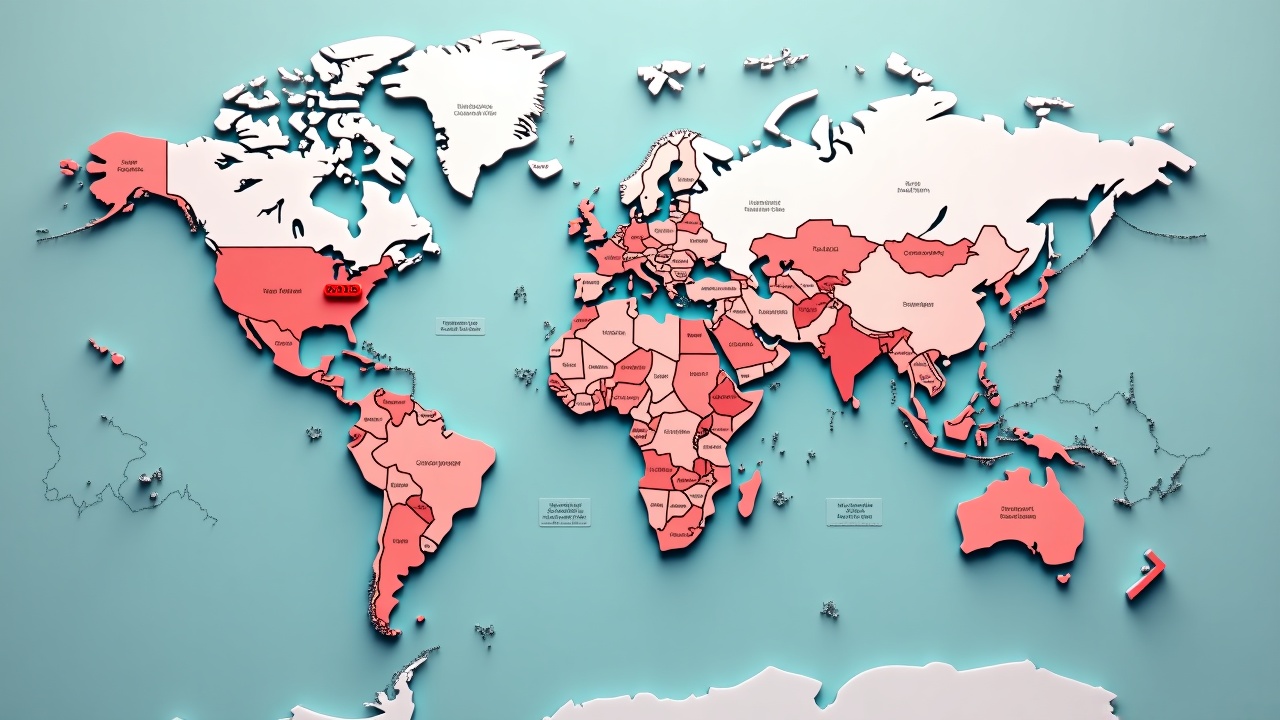
Polymarket has blocked access for users in 33 countries and restricted trading in additional jurisdictions as it evaluates Know Your Customer checks for a new beta product. The move reflects rising regulatory pressure on prediction markets, where access rules are increasingly shaped by sanctions, gambling laws, AML obligations and market-integrity concerns.
As of May 2026, Polymarket’s public rules show full access barred in 33 countries, with five more jurisdictions designated as “close-only,” meaning users can only exit existing positions. Japan is listed as “Frontend UI restricted,” while Ontario in Canada and Crimea, Donetsk and Luhansk in Ukraine are also excluded.
Compliance Controls Reshape Market Access
Polymarket’s documentation links the geographic restrictions to KYC obligations, sanctions regimes and other local legal constraints. That connection makes geoblocking a core compliance tool, not simply a product-access decision.
A company executive said mandatory KYC currently applies only to a new beta product, not the legacy polymarket.com interface. Even limited KYC testing signals an operational shift, because identity verification is becoming harder to avoid as the platform seeks broader regulated access.
The company faces four overlapping regulatory pressures: sanctions compliance, AML and suspicious-activity reporting, gambling-law classifications and market-integrity issues such as insider trading. Those vectors create a narrow path for expansion, especially in jurisdictions where prediction markets are treated as wagering.
Polymarket’s earlier $1.4 million fine in January 2022 remains part of the compliance backdrop. That prior enforcement history raises the cost of future missteps, making proactive controls more important for legal and commercial planning.
KYC Trade-Off Will Define the Next Phase
Polymarket regained U.S. access in 2025 after CFTC-focused compliance work and has pursued strategic changes, including acquisitions such as QCEX, noted as being in beta. Those moves point to selective re-engagement with regulated markets, rather than unrestricted global availability.
The trade-off is clear: limited KYC preserves more user anonymity and may protect product appeal, while stronger identity checks support deeper market access. Institutional partnerships will likely require more robust KYC and AML controls, especially where counterparties need clear reporting and sanctions assurance.
Failure to strengthen controls could produce predictable consequences. More fines, wider geoblocking and prolonged legal disputes would reduce Polymarket’s addressable market, while raising operating costs and deterring partners.
At the same time, KYC limited only to beta offerings may not resolve the larger compliance burden. The platform’s long-term expansion depends on whether experimental identity checks become durable platform-wide infrastructure.
Liquidity, revenue prospects and strategic value will increasingly depend on jurisdiction-by-jurisdiction compliance, not only on product demand.
Polymarket’s next phase will be shaped by how far it extends KYC and whether regulators accept its controls. The decision will determine whether the platform can expand market access while containing legal exposure in a prediction-market sector increasingly defined by enforcement.