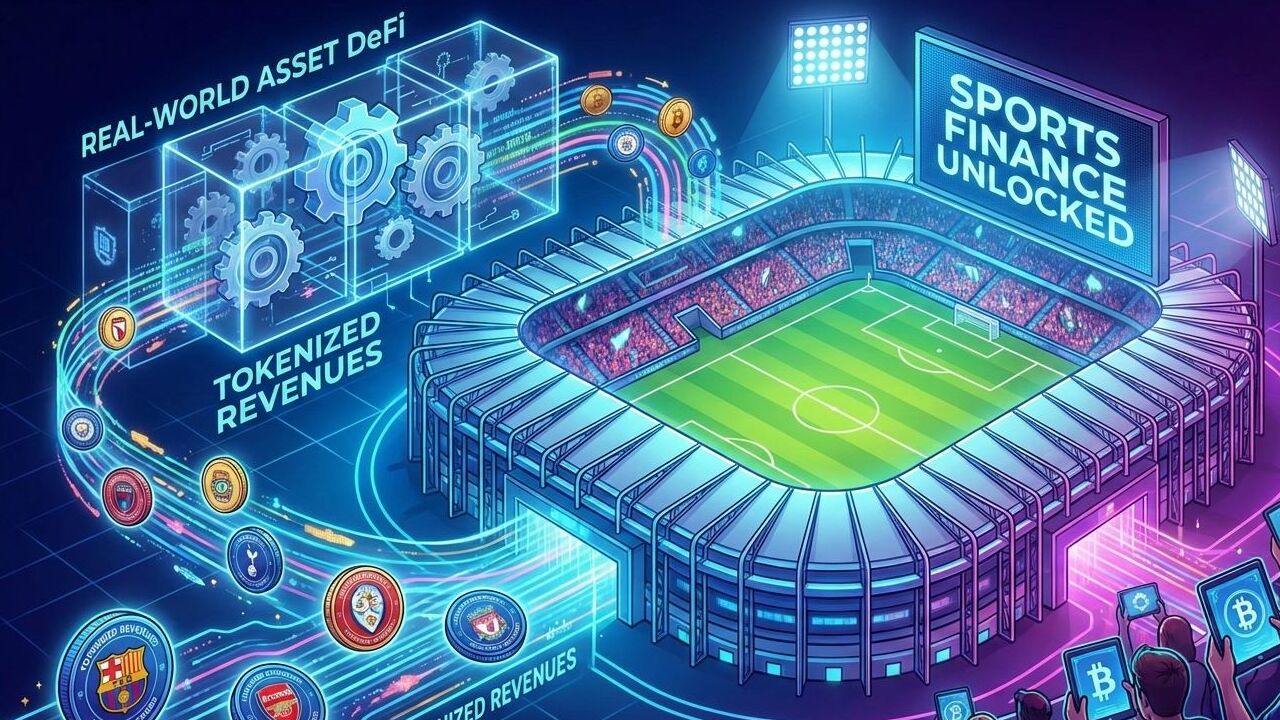
Soccer clubs rarely get paid in a smooth monthly rhythm, so short-term liquidity gaps can appear even with strong contracts. A new DeFi model is trying to close that gap by converting future revenues, especially media and broadcasting receipts, into tokenized onchain assets. The idea is straightforward: use blockchain plumbing to route stablecoin liquidity toward clubs faster than traditional bank financing that can be slow, expensive, and paperwork-heavy. The initiative is presented as part of a broader shift toward applying blockchain to practical financing problems in established industries, for clubs beyond elites.
Onchain Credit for Clubs
Decentral, a protocol hosted on the Chiliz blockchain, enables clubs and sports organizations to raise stablecoin liquidity by tokenizing future receivables. Those receivables can include broadcasting rights and other contracted payments, which are then used as onchain collateral. Investors supply capital to decentralized pools, while clubs access funding without relying on banks or specialized funds that often charge high fees and impose administrative requirements. When a sponsor or broadcaster pays, funds flow into Decentral’s smart contract, letting liquidity providers withdraw principal and any accrued return. That structure targets faster funding and cleaner settlement.
Chiliz says Decentral will start with an initial liquidity pool of $1 million in USDC, with a 90-day lock-up period and an anticipated 12% APY. The mechanics are meant to keep the yield story grounded: returns are settled onchain from pre-existing contractual revenue streams rather than from trading activity. As payments land in the smart contract, liquidity providers can pull out their principal along with whatever return has accrued. For clubs, the pitch is immediate working capital; for investors, it is exposure to a revenue-linked credit loop. All of it runs through decentralized pools.
The model speaks to a familiar pain point: clubs can sit on valuable long-term agreements yet still struggle to cover day-to-day needs, particularly outside the elite tier. Tokenization of real-world assets means representing traditional financial assets as digital tokens that can be bought, sold, and traded on blockchains, and here it is applied to sports receivables. Chiliz founder Alex Dreyfus calls this SportFi moving from concept to practical utility. Chiliz has historically been known for fan tokens, but this initiative targets financing the core mechanics of the sports economy. That could broaden access.