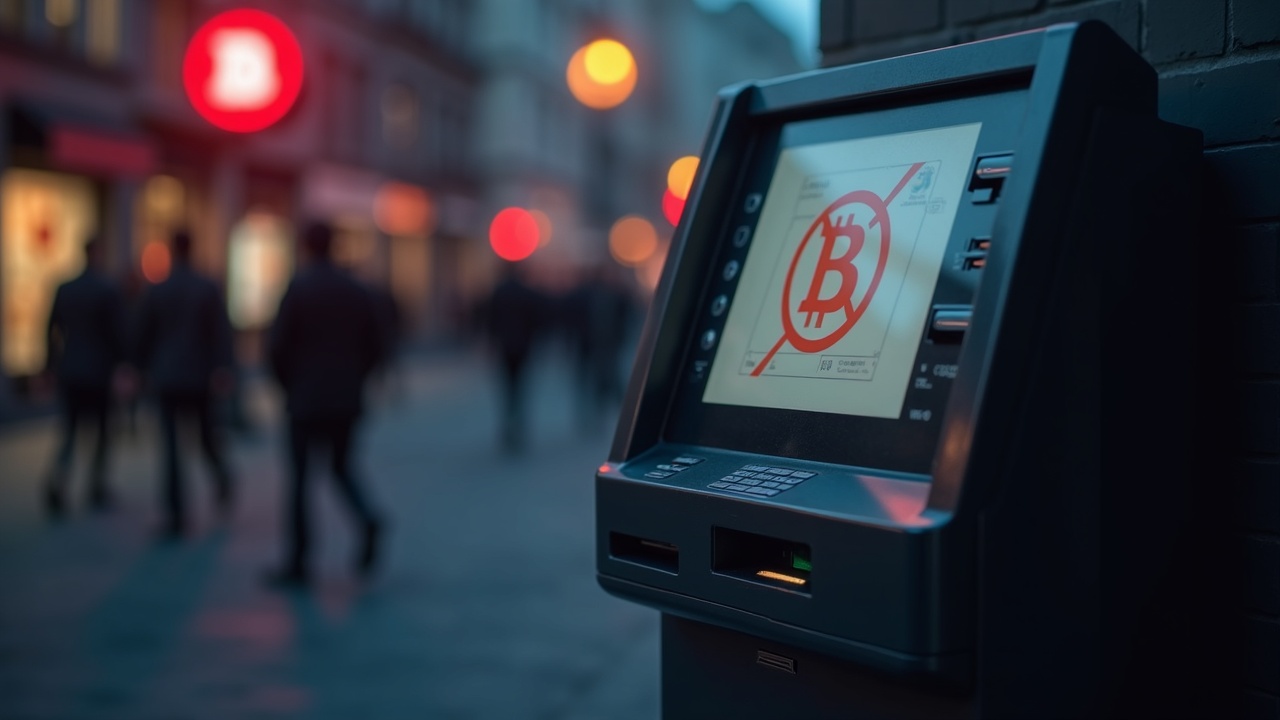
Delaware’s House has approved legislation to prohibit cryptocurrency ATMs, while New Jersey’s Senate Commerce Committee has advanced a similar measure, as lawmakers move against kiosks they associate with scams and excessive fees. Both efforts frame crypto ATMs as a consumer-protection risk rather than a financial-access tool.
The bills are now moving toward final votes in their respective legislatures. If enacted, they would effectively eliminate fiat-to-crypto kiosk operations in both states, with no carve-outs for continued operation under restricted conditions, making prohibition the core policy choice.
Lawmakers Target Kiosks With Full Prohibitions
The two proposals follow a similar legal design: ban the ownership, installation and operation of crypto ATMs, then attach financial penalties for violations. That structure gives operators and venue hosts a clear compliance mandate to remove machines rather than seek new licensing terms.
In Delaware, HB441 passed the House and was sent to the State Senate. The bill would require existing machines to be removed within 90 days of enactment and would also prohibit point-of-sale or cashier transactions that replicate ATM functionality, closing a potential workaround for kiosk-style crypto sales.
Delaware’s bill also includes enforcement and restitution provisions. Violators could face fines of up to $10,000, while illegally collected fees would need to be refunded to identifiable users or remitted to the state’s Consumer Protection Fund, creating direct financial exposure beyond machine removal.
In New Jersey, SB2141 advanced unanimously through the Senate Commerce Committee on June 8 and moved to the full Senate. The measure would bar businesses from owning, controlling, installing, managing or selling crypto ATMs, with a $10,000 fine for a first offense and $20,000 for repeat violations.
The New Jersey bill would take effect on the first day of the sixth month after enactment. That delayed effective date gives businesses some transition time, but the endpoint remains firm: crypto ATM operations would have to cease once the law becomes active.
Scam Losses and High Fees Drive the Crackdown
Lawmakers cited law enforcement data showing that the FBI’s Internet Crime Complaint Center recorded 13,460 crypto kiosk-related complaints in 2025. Those complaints produced $388.9 million in reported losses, a 58% year-on-year increase, giving legislators a fraud-loss narrative to justify aggressive intervention.
Fees added another point of concern. Legislators highlighted that typical crypto kiosk charges often exceeded 20% of transaction value, far above the 0.4% to 1% range available through regulated online venues, making the kiosk model vulnerable to accusations of predatory pricing.
The bills also reflect a broader policy shift beyond Delaware and New Jersey. Several other states have already moved to prohibit crypto kiosks statewide, a trend lawmakers used to support decisive action instead of calibrated licensing or enhanced supervision, reinforcing a move from regulatory ambiguity to outright bans.
Compliance teams would need to remove hardware, stop point-of-sale equivalents, preserve records and prepare for potential consumer remediation, especially where fees, fraud claims or restitution obligations become part of enforcement.
Treasury, legal and compliance teams should now track enactment timing, confirm whether existing systems fall within the statutory definitions and prepare shutdown workflows. As the bills proceed, the compliance landscape for kiosk operators is shifting toward clear statutory prohibition and higher remediation risk.
The broader market takeaway is that crypto ATM access is becoming harder to defend in jurisdictions where fraud data and fee concerns dominate the policy conversation. Delaware and New Jersey are not simply tightening supervision; they are moving toward a full exit requirement for kiosk-based crypto transactions.