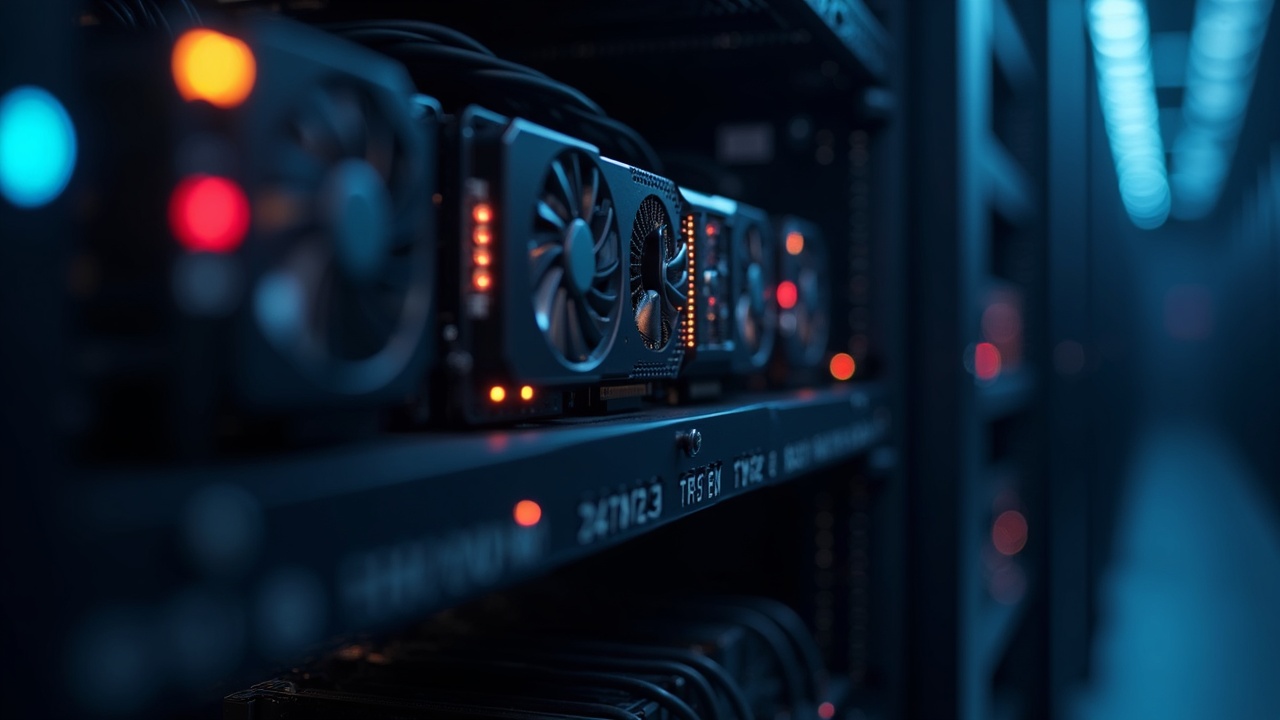
ARK Invest is positioning artificial intelligence as more than a hype cycle, arguing it is the catalyst for a prolonged capital-expenditure boom that reshapes how companies build and scale. In ARK’s framing, AI is pushing the economy toward an asset-heavy era where compute, data centers, and energy infrastructure become the new strategic battleground.
The firm anchors the thesis in adoption velocity and rising compute intensity, describing a demand curve that forces repeated rounds of infrastructure investment rather than a single build-and-done wave. ARK’s central claim is that consumers will adopt AI at roughly twice the pace of the 1990s internet, keeping compute demand structurally “on.” In that context, it points to annual growth in data-center systems accelerating from about 5% to 29% since the “ChatGPT moment,” with spending estimated at roughly $500 billion in 2025.
Why the AI boom looks like a multi-year buildout
ARK’s projections extend the same logic forward: if the workload keeps scaling, capacity has to follow. The cited outlook implies data-center systems spending could triple to about $1.4 trillion over coming years as hyperscalers and AI players compete for throughput and uptime. It also highlights expectations that hyperscaler CapEx could reach $602 billion in 2026, with roughly 75% tied to AI, alongside estimates spanning about $1.15 trillion of hyperscaler CapEx through 2027 and even multi-trillion-dollar requirements for AI-equipped compute through the end of the decade.
That spending profile, in ARK’s view, signals a structural reorientation rather than a cyclical budget bump. The argument is that software and services increasingly require physical compute—GPUs, ASICs, power, and cooling—driving a decade-high CapEx-to-revenue profile. Put simply, “digital” growth is becoming increasingly constrained by physical infrastructure and the ability to deploy it fast enough.
Energy and operational readiness become the gating factors
ARK treats power availability and data-center efficiency as first-order constraints, not back-office details. It emphasizes that much of the CapEx is flowing into advanced data centers and robust energy systems because compute demand is only as real as the electricity behind it. In practical terms, that elevates grid capacity, PUE, cooling design, and renewable procurement from operational metrics into board-level considerations.
The firm also acknowledges the trade-offs that come with sustained spending at this scale. ARK flags that large AI budgets can trigger negative stock reactions, while power constraints and supply-chain vulnerabilities remain credible braking forces on the buildout. At the same time, it argues the incentive structure still points toward expansion because the promise of ongoing productivity gains and a large revenue pool for model and application builders keeps capital committed.
That conviction shows up in portfolio moves described alongside the thesis, reflecting a preference for infrastructure beneficiaries over names perceived as less central to the buildout. ARK’s reallocation—selling Qualcomm ($31 million) and Teradyne ($28 million) while adding Google ($22 million) and Broadcom ($27 million)—signals a tilt toward companies tied to compute, networking, and systems integration. The implied objective is to align exposure with the parts of the stack most directly leveraged to rising AI capacity needs.
For operators, ARK’s framework reads like an execution roadmap as much as an investment view. If AI CapEx remains elevated, miners, data-center operators, and cloud providers should expect persistent pressure to secure grid capacity, optimize PUE, and diversify energy sources to stay competitive. For markets, the same dynamic suggests multi-year cash-flow and supply implications, paired with episodic volatility as investors continuously reprice spend cadence versus return expectations.