


Tokenized stocks could become one of the most important applications of blockchain technology. While much of the cryptocurrency market remains driven by speculation and price movements, the ability to trade stocks and exchange-traded funds around the clock offers enormous utility that traditional finance still does not provide on a widespread basis.
The arrival of new trading platforms and the growth of these assets on networks such as Solana represent an opportunity for the industry. Blockchain adoption does not have to depend exclusively on Bitcoin or altcoins. It can also advance through familiar financial products that offer greater flexibility, fewer operational restrictions, and more efficient settlement processes.
OKXICE brings tokenized stocks to a 24/7 market
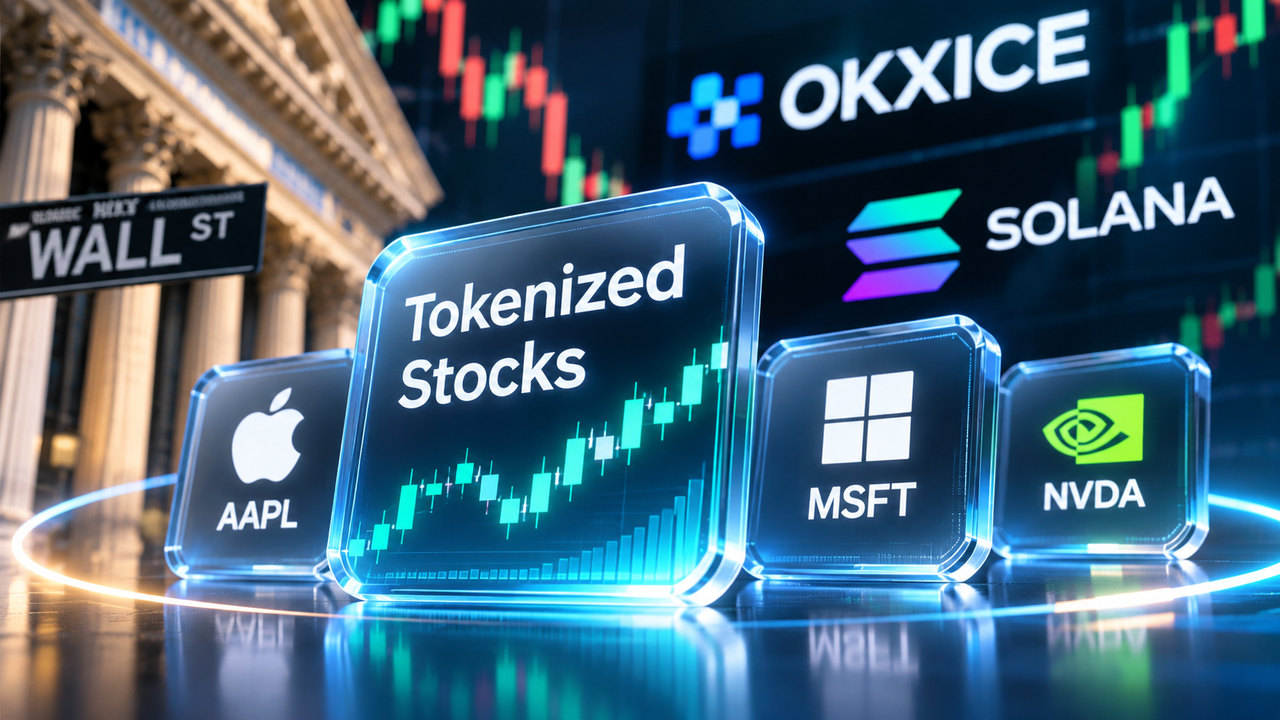
OKXICE announced the launch of its tokenized stock market, allowing eligible assets to be traded 24 hours a day, including weekends and public holidays. The project initially confirmed 113 assets, including stocks, ETFs, and other exchange-traded products, which will be introduced gradually.
OKXICE is a joint venture between OKX and Intercontinental Exchange (ICE), the owner of the New York Stock Exchange. Its model combines traditional financial infrastructure with smart contract-based trading on X Layer, an Ethereum layer-2 network.
The initiative goes beyond simply introducing new investment instruments. US stock markets operate on fixed schedules, even though corporate news, economic decisions, and international events do not follow those restrictions.
Allowing trading outside traditional stock market hours removes a limitation primarily imposed by market infrastructure, rather than one that serves the needs of today’s investors.
OKXICE’s initial service is restricted to eligible US customers and operates under a temporary regulatory exemption. It therefore does not yet represent universal access to stock markets, although it provides a practical demonstration of how such a system could work.
Solana shows that demand already exists
The growth of tokenized stocks on Solana provides another argument in favor of this transformation. According to data published by the Solana Foundation, the network processed approximately $4.4 billion in tokenized stock trading volume during September and reached one million wallets that had held these instruments.
The supply of tokenized stocks reached $684 million, following a 47% increase over three weeks. These figures represent financial activity using blockchain to trade instruments linked to traditional companies and investment funds.
The distinction from many cryptocurrency projects matters. Here, there is a recognizable financial asset and a concrete need: making it easier to trade, transfer, and use these instruments within new applications.
Tokenization can also enable fractional investments and expand opportunities to use certain assets as collateral in financial protocols. However, these benefits depend on the rights attached to each token and the conditions established by its issuer.
Regulation must keep pace with financial transformation
Tokenization also creates opportunities to modernize settlement processes. In the United States, traditional stock transactions generally settle under the T+1 system, while certain blockchain transfers can be completed considerably faster.
However, an immediate token transfer does not, by itself, guarantee the final legal settlement of a stock transaction. Ownership rights, custody arrangements, and intermediary obligations must be clearly defined.
The US Securities and Exchange Commission (SEC) has already begun addressing these issues. In September, the agency approved a temporary exemption for certain tokenized stock trading platforms, subject to specific operating conditions.
Regulation should move toward permanent rules that allow these markets to develop without weakening investor protections. Maintaining experimental models indefinitely would limit companies’ ability to build financial services at scale.
The cryptocurrency industry has spent years searching for applications capable of attracting users who are not solely interested in buying tokens and selling them at higher prices. Tokenized stocks offer an alternative: using blockchain to improve financial services that millions of people already know.
The OKXICE project and the activity recorded on Solana provide solid examples. The expansion of tokenized stocks will depend on instruments offering verifiable rights, sufficient liquidity, and regulatory conditions that allow operations beyond temporary programs.